School Safety Surfacing

Go to Markets for Safety Surfacing

Safety Surfacing for School Playgrounds

Playgrounds play a huge role in the holistic development of children, whether they are used in schools, parks or community spaces. As a school administrator or facility manager, finding a playground surfacing material that balances safety and longevity can be challenging, especially while navigating a tight school budget. 

Explore school playground surfacing options and learn how to calculate their true, long-term value.

Contact Us 

Your Top Playground Surfacing Options

The following are some playground surfacing options you can explore for your school. 

1. Poured-In-Place Rubber (PIP)

Poured-in-place rubber is a unitary, two-layer surfacing material ideal for school playgrounds. Its standout features include: 

  • Durability: When installed and maintained properly, PIP rubber can last a decade or more, depending on usage. 
  • High-impact protection: It provides a resilient surface with excellent shock absorption, effectively reducing the risk of life-threatening injuries. 
  • Unitary design: PIP rubber creates a continuous, smooth surface that helps minimize tripping hazards. 
  • ADA accessibility: PIP rubber surfacing is stable and consistent, making it fully compliant with the Americans with Disabilities Act (ADA). It’s easy for wheelchairs, strollers and other mobility devices to access. 
  • Customizability: You can customize PIP rubber to match your school’s preferred colors. This feature comes in handy when you want to integrate creative patterns, zoning, route guidance or 2D or 3D graphics to enhance the aesthetic appeal of your school’s playground. 

2. Loose Rubber Mulch

Loose rubber mulch is made from shredded recycled rubber, particularly tires. Compared to surfacing options such as sand or wood chips, rubber mulch offers a higher level of fall protection for kids. Schools choose this option for their playgrounds because of its distinct features, including: 

  • Porosity: This feature allows liquids to permeate through the playground surfacing rather than pooling on top. It helps reduce the risk of slips and falls on wet surfaces and can help deter mold or mildew growth. 
  • Environmental sustainability: Typically made from 100% recycled rubber, loose rubber mulch promotes sustainability by diverting millions of tires from landfills annually. 
  • Non-toxicity: Reputable manufacturers make loose rubber mulch from nontoxic materials, free of heavy metals or other toxins that could be harmful through skin contact. 
flower beds with bonded rubber mulch

3. Bonded Rubber Mulch

Bonded rubber mulch comprises shredded rubber mixed with an adhesive binder to form a single, porous layer. Its features include: 

  • Natural appearance: Bonded rubber mulch offers a natural, earthy aesthetic, making it an ideal choice for schools seeking a naturalistic playground design. 
  • Fade resistance: High-quality bonded rubber surfacing is treated with UV stabilizers to help it resist fading and maintain its color over time, even under prolonged sunlight exposure. 
  • Porosity: Bonded rubber mulch maintains good porosity. It’s designed to allow water to drain effectively and prevent standing water on the playground. 
  • Non-toxicity: Reputable manufacturers use processed, nontoxic recycled rubber, helping create a safer environment for children to play without concerns about chemical exposure. 
  • Environmental sustainability: Like loose rubber mulch, bonded rubber mulch supports environmental sustainability. It’s manufactured from recycled rubber, reducing the demand for virgin resources.  
No Fault Synthetic Turf on a playground

4. Synthetic Turf

Synthetic turf is a playground surfacing material made from artificial fibers, but designed to look and feel like natural grass. In school playgrounds, it’s typically installed with an underlying base layer or padding for added cushioning and impact absorption. Here are the unique features of synthetic turf: 

  • Consistent aesthetic: Unlike natural grass, synthetic turf stays green, vibrant and lush year-round, regardless of climate, foot traffic or season. Consequently, a playground with synthetic turf surfacing remains inviting and appealing to play on. 
  • Quick-drying capabilities: Artificial grass turf dries quickly, thanks to its engineered drainage system, leaving playgrounds ready to use almost immediately after it rains. 
  • Superior durability: Engineered to withstand intensive use, synthetic turf maintains its integrity and appearance way longer than natural alternatives. 
  • Low maintenance: With synthetic turf, you won’t need to worry about mowing, watering and fertilization — you’ll spend significantly less on maintenance. 

5. Rubber Playground Tiles

Rubber playground tiles are interlocking modular tiles made from recycled rubber. Features of this school safety surfacing include: 

  • Sectional replaceability: Should a section of the playground become damaged, only the affected individual rubber tile or interlocking unit needs replacement. 
  • Ease of installation: Installing rubber playground tiles is quicker and simpler than installing poured systems.
  • Portability: Rubber tiles can be disassembled and reinstalled in a different location. However, this capability largely depends on the initial installation method.

Key Factors to Consider When Choosing Playground Surfacing

Choose playground surfacing that provides high levels of safety for children when in use. Some important safety features playground surfacing should have include: 

  • Critical fall height: The safest playground surfacing can attenuate impacts from the playground equipment’s highest point to help minimize the risk of serious head injuries from falls. 
  • Slip resistance: Playground surfacing should provide adequate traction to help reduce slips and falls when wet. 
  • Non-toxicity: Surfacing should be made from materials certified free of chemicals and toxic substances that can be harmful through contact or accidental ingestion.

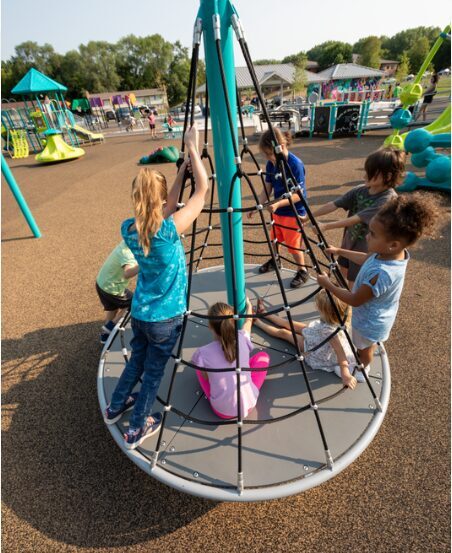
Opt for playground surfacing that allows children and caregivers with disabilities to move freely and easily around the playground, promoting inclusive play for everyone. A stable, firm surface supports mobility devices without requiring excessive effort.

Consider the time, effort and resources required for daily, weekly and annual maintenance. If your school has a tight budget, for instance, it’s better to go for surfacing that requires minimal maintenance. 

The age of the students using the playground significantly influences the safety and durability requirements of playground surfacing. Take elementary school students, for example. They engage in more active and energetic play than preschoolers, so they require surfacing that provides robust impact attenuation since they are at greater risk of falls. 

Preschoolers, on the other hand, are at a developmental stage that often involves mouthing objects, placing them at a higher risk of choking. For this reason, surfacing options like rubber tiles are a better choice since they are interlocked in place and prevent access to small, loose materials that could be ingested during play. 

Assess the impact local weather has on the different surfacing material choices. Here’s a breakdown you can use: 

  • Extreme heat and intense sunlight: In extremely hot climates, dark-colored surfacing materials absorb and retain heat, which can be uncomfortable for children’s skin. If your school is located in regions with such hot climates, consider going for lighter-colored surfacing or planning for shade structures. Additionally, prolonged exposure to intense UV radiation can cause some materials to break down, so it’s best to choose playground surfacing treated with UV stabilizers. 
  • Heavy rainfall and high humidity: Playground surfacing, such as synthetic turf and loose rubber mulch, is more ideal for schools in regions with heavy rainfall and high humidity. 
  • Freeze-thaw cycles: Materials that absorb water expand when frozen and contract when thawed, leading to cracking, breaking and degradation over time. Schools in such regions require surfacing materials that are nonabsorbent and can accommodate some degree of expansion. 

How to Calculate the True Cost of School Playground Surfacing

To calculate the true cost of school playground surfacing, review these factors: 

  • Initial costs: This includes the price of the surfacing material, sub-base preparation, installation labor, specialized equipment, delivery charges and costs for containment or edging.
  • Ongoing maintenance costs: Factor in routine year-round maintenance tasks, such as cleaning, turf brushing and raking for loose fill. Also, consider the cost of materials for minor repairs and regular safety inspections.
  • Future replacement costs: Review the cost of removing and replacing playground surfacing at the end of its useful life. 
  • Material lifespan and warranty: Evaluate the expected durability of the surfacing material your school is considering — this factor impacts when future replacement will occur. Additionally, assess the manufacturer’s warranty coverage for material defects or premature wear, as this can significantly reduce long-term financial risk. 

When considering your options, request long-term cost estimates to calculate the total cost of ownership. 

Find Your Ideal Playground Surfacing

The smartest way to choose playground surfacing for your school is by balancing cost, safety and durability. At No Fault Surfaces, we understand the importance of selecting surfacing that protects children, encourages play and aligns with your unique budget and environmental considerations. 

That’s why we offer a wide range of high-quality, compliant playground surfacing options to meet diverse needs, while also helping your project qualify for LEED credits. Additionally, we offer durable school track surfacing designed to withstand constant impact and absorb the shock from jumps.

Not sure which playground surfacing is right for your school? Our dedicated team of expert playground advisors is ready to provide personalized guidance, helping you make the best, most sustainable long-term decision for your students. Contact us today to learn more about the options best suited for your needs. 

Request a Quote

Partner with a Leader in School Surfacing

No Fault Surfaces has been revolutionizing school surfacing for over four decades, uniquely qualifying us as a trusted business partner. We’re also active members of cooperative purchasing groups, including Sourcewell. You benefit from a simplified experience and leveraged buying power.

Request a free custom quote or get in touch with your local sales representative for more information.