Schools have a responsibility to provide the safest environment for their students while also being cost-conscious with their budgets. Although a lower price may be attractive, it’s not always the most cost-effective option, especially when considering long-term maintenance, upkeep and replacement. For example, wood chips may seem like an affordable school playground surfacing option, but they require constant maintenance to ensure student safety.
Finding the best playground surface means looking beyond the initial price tag to understand what you’re paying for over time.
A surface is only budget-friendly when it provides an excellent combination of initial investment, reasonable maintenance and satisfactory long-term performance.
The best way to conceptualize this is to consider the total cost of ownership. To determine this, there are a few things you’ll want to think about, including:
The most sensible approach would be to consider the 10-year window, as this fits into typical warranty periods and capital planning cycles. Often, when you compare the cost per year versus the cost per install, the difference is quite significant.
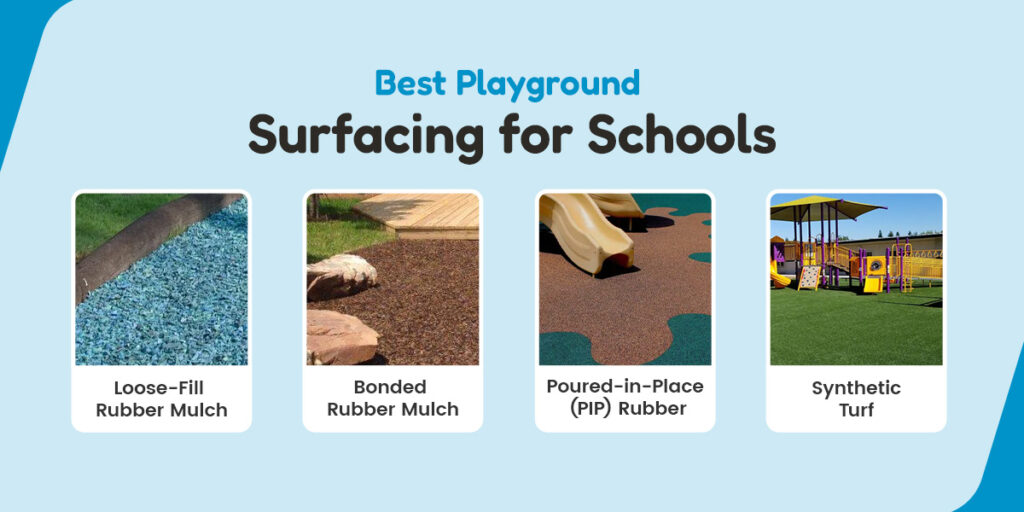
Below are some of the most common types of surfaces found in school playgrounds.
Best suited for: Schools looking to upgrade from engineered wood fiber (EWF) and find an improved long-term investment, without a significant increase in costs.
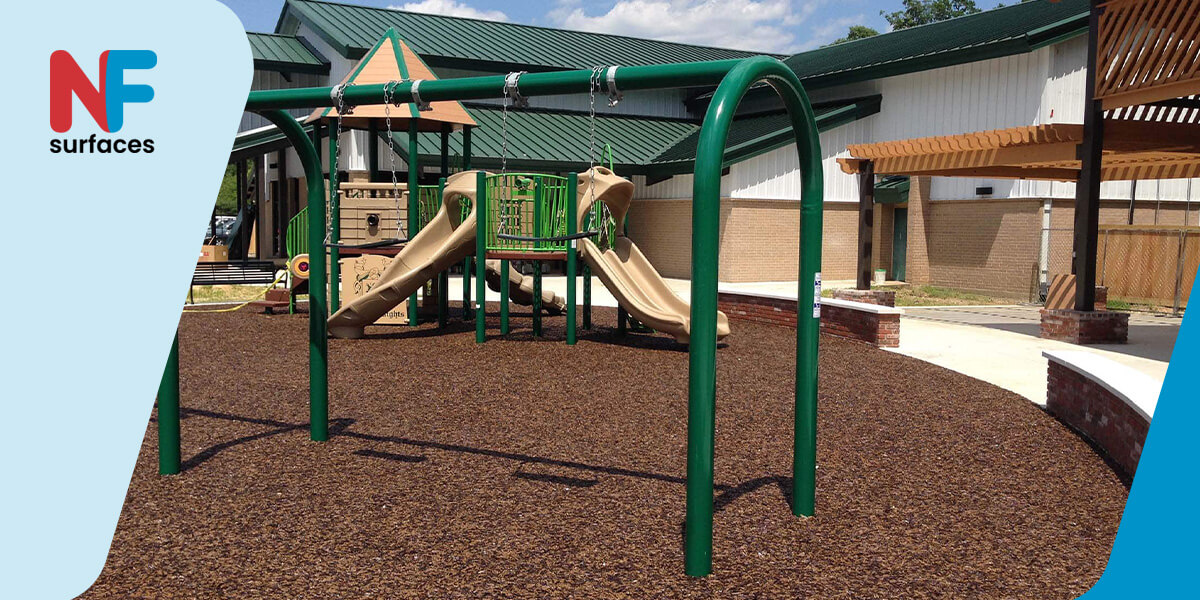
Loose-fill rubber mulch is usually the first step up for schools looking to replace wood chips. The mulch looks similar to what you would find with wood chips, but functions very differently.
Key benefits of loose-fill rubber mulch include:
With proper installation and maintenance, loose-fill rubber mulch has proven to be one of the most affordable and long-lasting options available.
Best suited for: School playgrounds with high traffic that require long-lasting durability, flexibility in design and minimal daily maintenance.
This option creates a mulch appearance by combining a bonding agent and shredded rubber in a single pour and applying it to the ground using a trowel. When the bond dries, this creates a solid, unitary surfacing system.
Advantages of using a bonded rubber mulch:
Best suited for: Heavy-use school playgrounds requiring high durability, ease-of-design and minimal daily maintenance for many years.
The two-layered PIP system is made up of a bottom layer designed for shock absorption and a top layer of either EPDM or TPV rubber granules for color and abrasion resistance. On-site mixing and application allow suppliers to create a custom-fit layout based on your needs.
Benefits of using poured-in-place rubber at schools:
Best suited for: Play areas that also provide a “green” space for informal gathering.
Synthetic turf for schools is different than the larger sports field systems available and is tailored to meet the demands of playgrounds and outdoor educational settings.
Benefits of using synthetic playground turf for schools:
In areas that allow multiple forms of recreation, synthetic playground turf can be the ideal choice for combining a clean, natural visual appeal with high levels of playability.
School budgets are rarely flexible, but there are ways to make quality surfacing products more accessible. We see many districts using a combination of the following methods:
No Fault Surfaces is a member of cooperative purchasing groups such as Sourcewell. These programs can reduce the complexity and costs of the procurement process and allow for competitive pricing bids.
Schools often look at grants that support inclusive play, health and wellness, and safe routes to school. Parents, teachers and local education foundations may also contribute funds to upgrade surfacing as part of a playground renovation project.
One way to meet the need for premium surfacing, such as PIP and bonded rubber mulch, is to install this in high-impact areas and then use another approved material in lower-traffic areas. This method allows you to prioritize safety and accessibility where it counts most, while staying within your budget.
Ultimately, there is no one-size-fits-all solution to choosing the best surfacing option. The decision will depend on many factors, including traffic patterns in the area, available budget, accessibility requirements and how the students will use the space.
At No Fault Surfaces, we have been working with school districts for more than 47 years. Our staff has experience with many different types of requirements and budgets, and we’ll be pleased to walk you through the options that will best fit your needs.
Are you ready to see how much your school could save? Fill out our contact form to get an accurate cost comparison customized to your school project.