
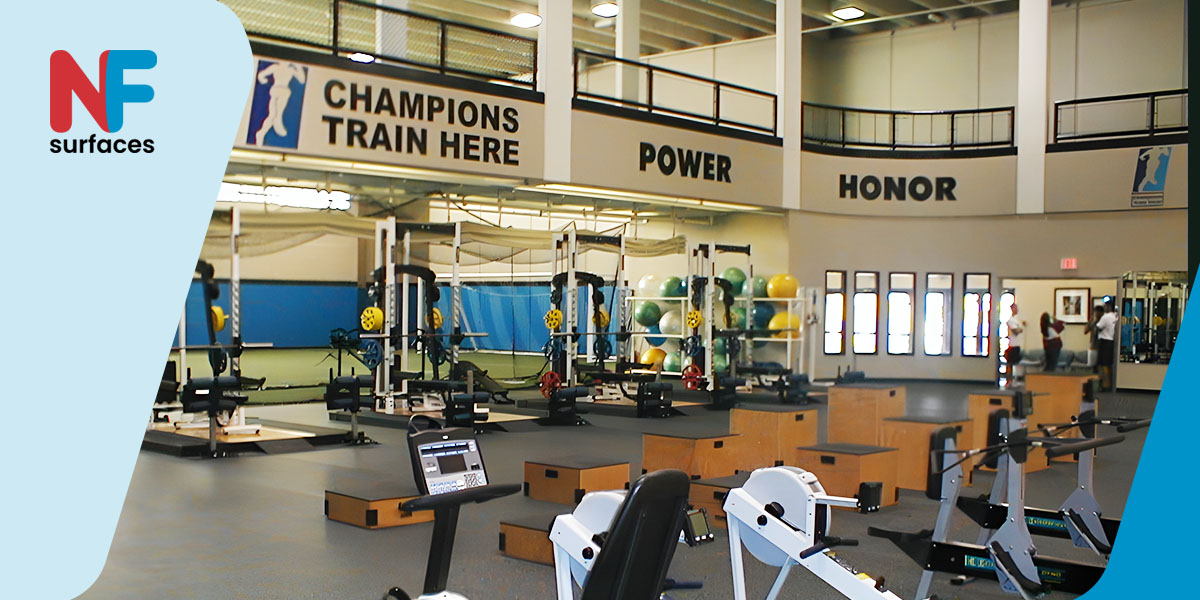
Quality sports flooring is essential for any gym or fitness facility. But with several flooring options available, it can be challenging to find the solution that best meets your gym’s criteria.
Rubber rolls and rubber tiles offer distinct advantages for indoor sports flooring. However, you should weigh the pros and cons to determine which one best suits your facility’s requirements and long-term goals.
When evaluating rubber floor tiles and rolls, examine multiple factors that influence the up-front investment and long-term satisfaction associated with your high-performance sports flooring.
Ease of installation is a noteworthy benefit of rubber floor tiles. Lightweight, manageable, DIY-friendly interlocking rubber floor tiles are easy to position, and you can often install them without adhesive. Simple installation and straightforward maintenance make tiles attractive for facilities looking to minimize costs or those who prefer having the flexibility to reconfigure their space over time.
Tile flooring is also highly versatile. You can arrange colors in different ways to create a fresh visual effect or maintain branding consistency.
In contrast, rubber sport flooring rolls present different installation considerations and requirements.
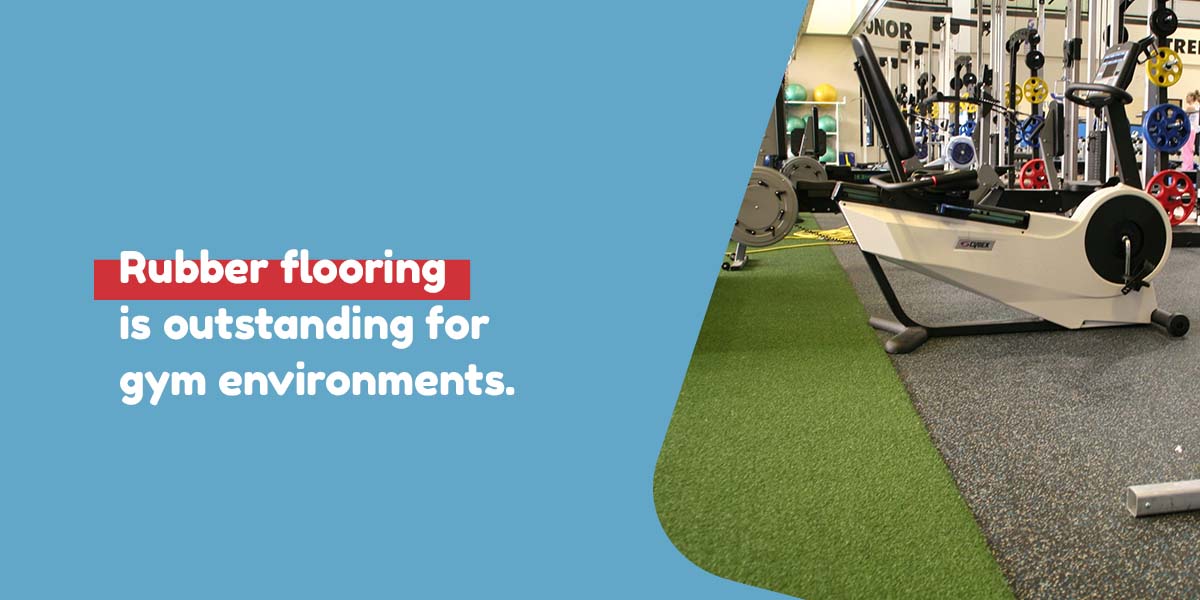
Rubber flooring is outstanding for gym environments. Rolls and tiles are available in similar thicknesses, allowing you to select the appropriate depth based on your facility’s needs.
In many cases, a thickness of 5/16 inches will be sufficient for general gym use. You may need thicker flooring in areas where people lift heavy weights and may drop equipment from heights.
Rolls and tiles excel in different scenarios. For instance, rubber floor rolls have stable, continuous surfaces, which better withstand the constant movement of heavy equipment and foot traffic. Fewer seams reduce the risk of edges lifting or separating over time, making rolls particularly well-suited for spaces that experience heavy daily use.
While rubber tiles are durable, they have more individual seams between pieces and may wear out faster, particularly in extremely high-traffic areas. However, high-quality tiles will perform well in most gym applications.
Beyond installation and performance, cost is often the make-or-break criterion when selecting flooring. Factor in the total cost of ownership when budgeting for your flooring project, not just the initial purchase price.
Consider these up-front and long-term expenses.
Your flooring’s visual impact and ease of maintenance contribute to your facility’s professional image. The differences between tiles and rolls can influence your decision based on your desired look.
Rolls offer a continuous, professional look with fewer seams throughout the space than tiles do. This smooth finish creates a polished appearance that’s particularly valuable in commercial gyms.
While rubber flooring tiles for indoor sports have more visible seams between the pieces, they offer creative flexibility to mix different colors, create patterns, and designate specific training zones. Many gym owners say this flexibility is a fair trade-off for the additional seams.
Rolls and tiles are relatively easy to keep clean with regular sweeping and mopping. However, rolls may be slightly lower-maintenance, as fewer seams mean fewer crevices where dirt and debris can accumulate.
Choose based on whether you prioritize a uniform, professional appearance or value the creative flexibility and easy replacement that tiles provide.
Once you understand how tiles and rolls compare, start applying this knowledge to your specific situation. The choice between rubber tiles and rolls depends on your facility’s needs, budget constraints and long-term goals.
Different gym environments favor different flooring solutions. Evaluate your facility’s size, shape and intended use to guide your decision.
Thanks to their lower cost per square meter and unitary finish, rolls are frequent fixtures in larger commercial spaces. Rolls are also more cost-effective in regularly shaped facilities and those that are unlikely to change their layout very often.
On the other hand, tiles may be better in smaller or irregularly shaped facilities, such as home gyms, boutique fitness studios or compact training spaces.
Choose tile flooring if your priorities include lower up-front costs, customization opportunities and simple, DIY installation and removal.
You may prefer rolls if your priorities include:
While comparing the pros and cons of each flooring option provides a foundation for your decision, every facility has unique requirements that may benefit from professional guidance. Factors like your subfloor condition, local climate, specific athletic activities and long-term facility plans can all influence which option will perform the way you expect.
Speaking with a flooring expert who understands the demands of sports facilities can help you make an informed decision. An experienced professional can assess your facility and ask you questions about your budget and priorities to recommend the solution that will deliver optimal results.
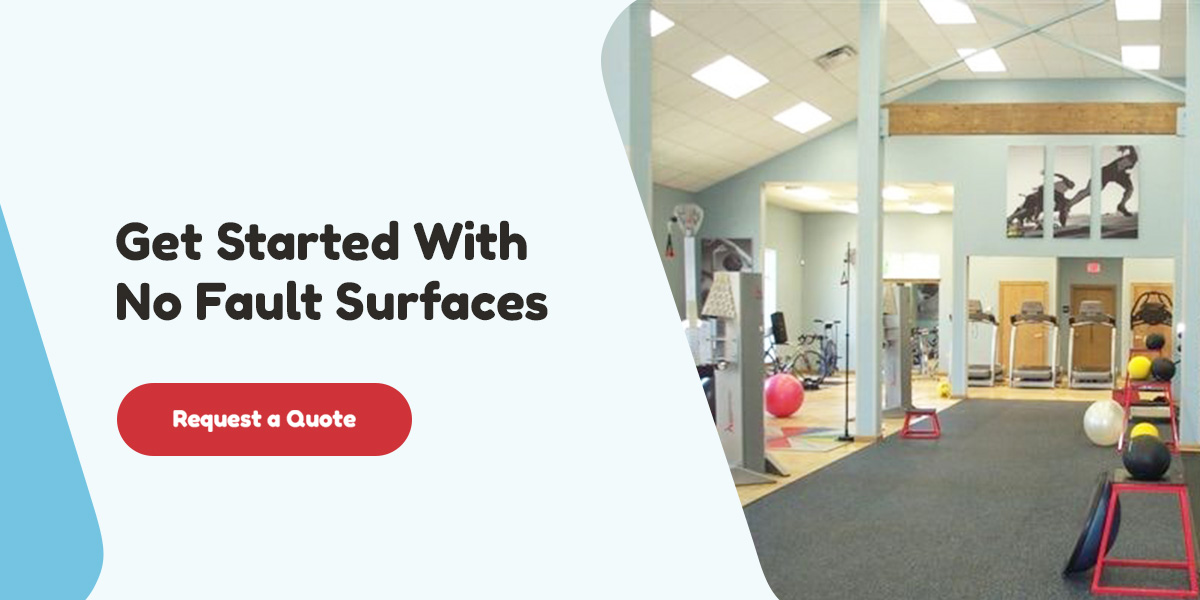
Whether you choose tiles or rolls, you need premium flooring to deliver lasting performance. No Fault Surfaces is a leading provider of indoor sports flooring, with over four decades of experience delivering excellent solutions to our clients.
Our experienced sales team can help you select the right solution for your facility. We use quality materials, meet ASTM standards and offer certified installation crews nationwide, which is why you can trust us to deliver excellent flooring to your sports facility.
To find out how we can help floor your indoor sports area, contact us today.


