
Hot playground surfaces can make your play space unusable during peak hours. When surface temperatures climb significantly above the surrounding air temperature, they become too hot for comfortable play during what should be high-traffic hours.
Understanding what drives those temperature differences is the first step toward planning a more usable play space. This guide walks through the relationship between surfacing and temperature, highlighting options and design strategies to improve playground usability in hot climates.
Not all playground surfacing responds to heat in the same way. Color and material type both affect how much heat a surface absorbs, how long it holds that heat and how comfortable the play space feels during warm parts of the day. Understanding those variables before installation can help you avoid performance limitations after your playground is already in place.
Darker colors absorb more solar radiation than lighter colors, which can translate into higher surface temperatures underfoot. Research measuring common playground surfacing materials found notable differences in maximum surface temperatures between color tones, with dark ethylene propylene diene monomer (EPDM) reaching approximately 77.8° Celsius under full sun, while lighter-toned materials tested significantly cooler.
For hot-climate installations, lighter surfacing colors can make a measurable difference in surface temperature compared to darker alternatives.
Color plays a major role in heat performance, but material composition also affects how a surface absorbs, releases and retains warmth throughout the day. Some playground surfacing materials dissipate heat more efficiently as conditions change, while others stay warm longer after peak sun exposure.
These three physical factors can influence performance:
Several surfacing options can help address heat-related challenges in playground environments, each offering different approaches to thermal management.
When evaluating surfacing options for hot climates, consider light colored rubber surfacing for heat management as a foundational choice rather than an add-on feature. Poured-in-place (PIP) rubber surfacing with a custom EPDM color wearing course can be a strong option for playground surfaces in hot climates. Choosing lighter custom color blends in the EPDM wearing course can help reduce surface temperature compared to darker color options.
As an added advantage, the unitary installation method supports accessibility, impact attenuation and design flexibility. When paired with lighter color selection, this type of surfacing can help support thermal comfort goals while also meeting key performance needs for playground environments.
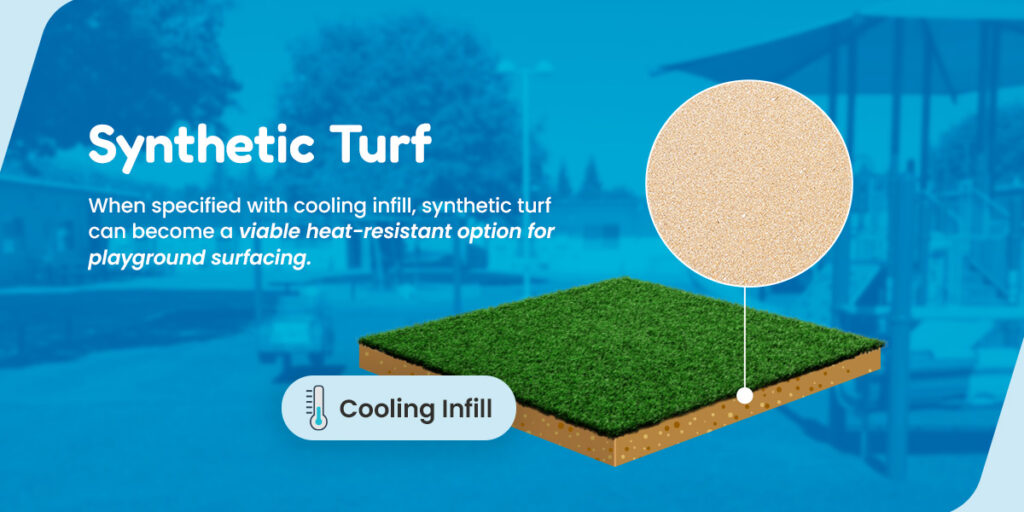
Standard synthetic turf for playgrounds can run hot in direct sunlight, particularly when paired with traditional crumb rubber infill. The turf fibers absorb solar radiation, and heat-retaining infill materials compound the problem. Synthetic turf systems with cooling sand infill can help reduce surface temperatures compared to traditional crumb rubber infill.
When specified with cooling infill, synthetic turf can become a viable heat-resistant option for playground surfacing. The turf can offer a naturalistic aesthetic that works well in parks and schools looking to integrate play areas into broader landscape design. It’s a practical choice when you want the appearance and feel of grass with significantly lower water requirements than natural turf in arid environments.
Incorporating water play areas and splash pads into hot-climate playground design can tackle the heat challenge from a different angle. Rather than focusing solely on reducing playground surface heat, water features create naturally cooler play environments that can help support usability even when traditional playground surfaces become too hot.
The surfacing around these features requires careful selection. Ideally, they should handle continuous wet conditions while providing slip resistance and adequate impact protection where fall-height requirements apply.
In hot-climate settings, water play becomes a strategic asset because incorporating water elements into your play space gives families a reason to visit during the warmest parts of the day. Depending on the site layout, climate, shade and surfacing choices, this feature can help extend the playground’s usability beyond the cooler parts of the day.
Even the best surfacing choices perform better when paired with intentional site design and maintenance practices.
Shade is the most powerful site-level tool for reducing playground surface temperatures. Studies show that shaded surfaces remained below burn thresholds even when identical unshaded materials reached temperatures associated with increased burn risk or reduced usability. Similarly, a 2025 study of 142 playgrounds found that most recently upgraded sites experienced improved thermal safety when shade was incorporated into the design.
Factor shade structures into your playground plan during design. Remember, shade works in combination with surfacing choice, not as a replacement for it.
Periodic watering of playground surfaces, in accordance with manufacturer specifications and local water-use rules, can temporarily reduce surface temperatures during peak heat hours. This is a maintenance practice, not a substitute for good material and color choices, but it can make a difference during peak usage windows.
Metal components, dark plastic slides and handrails can reach elevated temperatures even when ground surfacing is well-selected, so make equipment temperature checks part of your routine maintenance during peak summer hours to identify problem areas before they affect usability. This data can also inform equipment replacement decisions or help you prioritize where shade coverage would have the greatest impact.
Choosing the right surfacing for a hot-climate playground means weighing safety, usability and long-term performance. No Fault Surfaces has five decades of experience helping facility managers and landscape professionals navigate these decisions. Our portfolio includes over 16 million square feet of poured-in-place rubber installed worldwide, with certified crews handling installations nationwide.
Whether you’re planning a new playground or upgrading an existing space, we can help you find solutions designed to support thermal performance, safety and durability goals. Ready to explore your options? Request a quote or contact our team to discuss surfacing solutions that fit your site, budget and performance goals.